Woodworm infestations can remain hidden inside timber for years, causing gradual damage to roof beams, floor joists, furniture, and structural wood before homeowners notice the warning signs. While traditional chemical treatments have been widely used to control wood-boring insects, modern pest management has introduced a highly targeted, chemical-free alternative—microwave woodworm treatment.
Professional microwave equipment allows trained technicians to generate controlled heat inside infested timber, eliminating woodworm larvae, eggs, pupae, and adult beetles without relying on pesticides. Unlike DIY solutions, these specialist systems require expert knowledge, careful planning, and strict safety procedures to ensure effective treatment while protecting the timber.
In this guide, we’ll explain how professionals use microwave equipment on-site, from the initial inspection to the final assessment, and why expert application is essential for successful woodworm control.
What Is Microwave Woodworm Treatment?
Microwave woodworm treatment is a chemical-free pest control method that uses controlled electromagnetic energy to eliminate insects living inside timber.
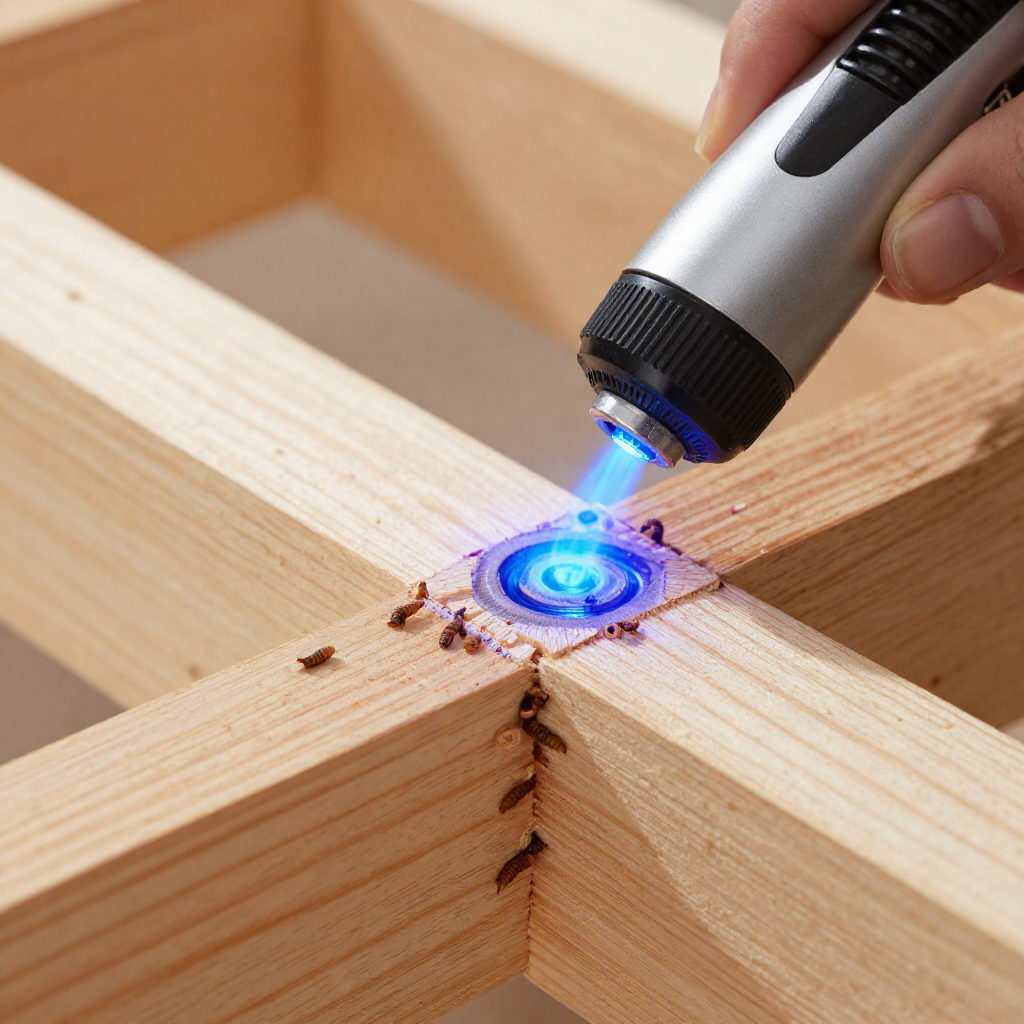
Professional equipment directs microwave energy into the affected wood, where it interacts with naturally occurring water molecules. Through a process called dielectric heating, heat is generated inside the timber until it reaches temperatures that are lethal to:
- Woodworm larvae
- Beetle eggs
- Pupae
- Adult wood-boring beetles
Unlike chemical treatments, microwave technology works through controlled heat rather than insecticides.
Step 1: Initial Property Inspection
Every professional treatment begins with a detailed inspection.
The technician examines the property to:
- Confirm the presence of woodworm.
- Identify signs of active infestation.
- Assess the condition of the timber.
- Locate affected areas.
- Determine whether microwave treatment is appropriate.
Common indicators include:
- Fresh exit holes
- Powdery frass
- Weak or damaged timber
- Moisture problems
- Evidence of beetle activity
A thorough inspection helps ensure that treatment targets the correct locations.
Step 2: Identifying the Woodworm Species
Different wood-boring beetles behave differently.
Professionals may identify species such as:
- Common Furniture Beetle
- Deathwatch Beetle
- House Longhorn Beetle
- Powderpost Beetles
Knowing the species helps technicians understand:
- Typical infestation patterns
- Preferred timber types
- Areas requiring inspection
- Potential structural risks
Step 3: Assessing Timber Accessibility
Microwave equipment performs best when technicians have direct access to the affected timber.
During the inspection they evaluate:
- Roof spaces
- Floor joists
- Exposed beams
- Timber framing
- Furniture
- Structural supports
If the timber is concealed behind walls or ceilings, they determine whether limited access is necessary to complete the treatment effectively.
Step 4: Preparing the Treatment Area
Before treatment begins, the work area is prepared.
This may involve:
- Clearing obstacles around the timber.
- Protecting nearby surfaces where appropriate.
- Ensuring safe working conditions.
- Confirming access to the affected area.
Preparation allows technicians to position equipment accurately and work efficiently.
Step 5: Positioning the Microwave Equipment
The microwave applicator is carefully placed against—or very close to—the section of timber being treated.
Proper positioning is important because it helps:
- Focus energy on the infestation.
- Achieve even heating.
- Reduce unnecessary heating of surrounding materials.
- Improve treatment efficiency.
Each section of timber is treated individually according to the treatment plan.
Step 6: Applying Controlled Microwave Energy
Once everything is ready, the technician activates the equipment.
Microwave energy enters the timber and interacts primarily with water molecules naturally present within the wood.
These molecules rapidly vibrate, generating heat through dielectric heating.
The goal is to raise the internal timber temperature to approximately 55–60°C (131–140°F) for an appropriate period to eliminate:
- Eggs
- Larvae
- Pupae
- Adult beetles
Professional systems are designed to deliver controlled energy rather than excessive heat.
Step 7: Monitoring Temperature
One of the most important parts of the process is temperature monitoring.
Technicians ensure that the timber reaches the required treatment temperature while avoiding unnecessary overheating.
Monitoring helps:
- Protect sound timber.
- Improve treatment effectiveness.
- Ensure consistent heating.
- Reduce the risk of damage.
Professional equipment is designed to support accurate temperature control throughout the treatment.
Step 8: Treating Additional Areas
If multiple beams, joists, or furniture items are affected, technicians repeat the process for each treatment location.
Every section is assessed individually because factors such as:
- Timber thickness
- Moisture content
- Accessibility
- Wood species
can influence treatment settings.
Step 9: Final Inspection
After treatment, the technician performs a final inspection.
This may include:
- Checking treated timber.
- Confirming completion of the treatment plan.
- Discussing any structural concerns.
- Providing recommendations for ongoing maintenance.
The inspection ensures the homeowner understands both the results and any additional work that may be required.
Does Microwave Treatment Repair Damaged Wood?
No.
Microwave treatment eliminates wood-boring insects, but it does not restore timber already weakened by years of infestation or decay.
If structural damage is significant, repairs or replacement may still be necessary after the pests have been eliminated.
Why Professional Equipment Is Essential
Professional microwave systems differ completely from household microwave ovens.
They are specifically designed for:
- Controlled energy delivery
- Timber preservation
- Accurate temperature management
- Safe operation
- Localized pest treatment
These systems should only be operated by trained technicians.
Advantages of Professional Microwave Treatment
Chemical-Free
No pesticides or insecticides are used.
Targeted Treatment
Only affected timber is treated.
No Chemical Residues
The timber remains free from pesticide residues after treatment.
Environmentally Friendly
Microwave treatment reduces chemical use while providing effective pest control.
Suitable for Valuable Timber
Professional microwave treatment is often considered for:
- Heritage buildings
- Antique furniture
- Museums
- Churches
- Historic timber structures
Safety During Treatment
Professional technicians follow established safety procedures throughout the process.
These typically include:
- Controlled equipment operation.
- Monitoring treatment temperatures.
- Restricting access to the immediate work area.
- Following manufacturer guidance.
- Inspecting surrounding building materials before treatment.
These precautions help ensure both effective pest control and safe working conditions.
Preventing Future Woodworm Problems
Even after successful treatment, prevention remains essential.
Homeowners should:
- Repair roof leaks promptly.
- Improve ventilation.
- Keep timber dry.
- Reduce indoor humidity.
- Inspect roof spaces annually.
- Monitor furniture for fresh frass and exit holes.
- Address damp conditions quickly.
Healthy timber is much less attractive to wood-boring beetles.
Common Myths About Professional Microwave Treatment
Myth 1: Anyone Can Perform Microwave Treatment
Fact: Microwave woodworm treatment requires specialist equipment, training, and experience. It should always be carried out by qualified professionals.
Myth 2: Microwave Equipment Damages Healthy Timber
Fact: Professional systems are designed to heat timber to insect-killing temperatures while minimizing the risk of damage to sound wood.
Myth 3: Treatment Is Complete Without Inspection
Fact: A detailed inspection before and after treatment is essential to confirm the infestation, guide the treatment plan, and identify any structural issues that may require further attention.
When Should You Contact a Professional?
Professional advice is recommended if:
- Fresh exit holes continue appearing.
- Powdery frass is regularly visible.
- Structural timber is affected.
- Valuable furniture requires treatment.
- You suspect an active woodworm infestation.
- You want a chemical-free treatment option.
A qualified timber preservation specialist can inspect your property, determine whether microwave treatment is appropriate, and carry out the process safely using professional equipment.
Conclusion
Professional microwave woodworm treatment is a carefully planned process that combines expert inspection, controlled heating, and precise application to eliminate wood-boring insects hidden inside timber. From the initial assessment and equipment positioning to temperature monitoring and final inspection, every step is designed to maximize treatment effectiveness while preserving healthy wood.
Unlike traditional chemical treatments, microwave technology provides a targeted, residue-free solution that is particularly valuable for homes, heritage buildings, museums, and antique furniture. By choosing a qualified specialist and following good timber maintenance practices, homeowners can protect their property from long-term woodworm damage while benefiting from a modern, environmentally friendly pest control method.Visit online https://www.shashel.eu for more details .